
Before you buy something new, ask what problem you're solving.
Before deciding what to buy, it can be really useful to stop and ask what problem or irritation am I actually trying to solve?
Because the answer might be quite different from what you first thought.
Sometimes we’re very quick to decide what’s wrong with a room.
The sofa is too big.
The dining table is too heavy.
I need more storage.
I need another chair.
I need new furniture.
And sometimes we’re right.
But sometimes the thing we think is the problem isn't actually the problem at all.
I've been reminded of this while changing my own dining area.
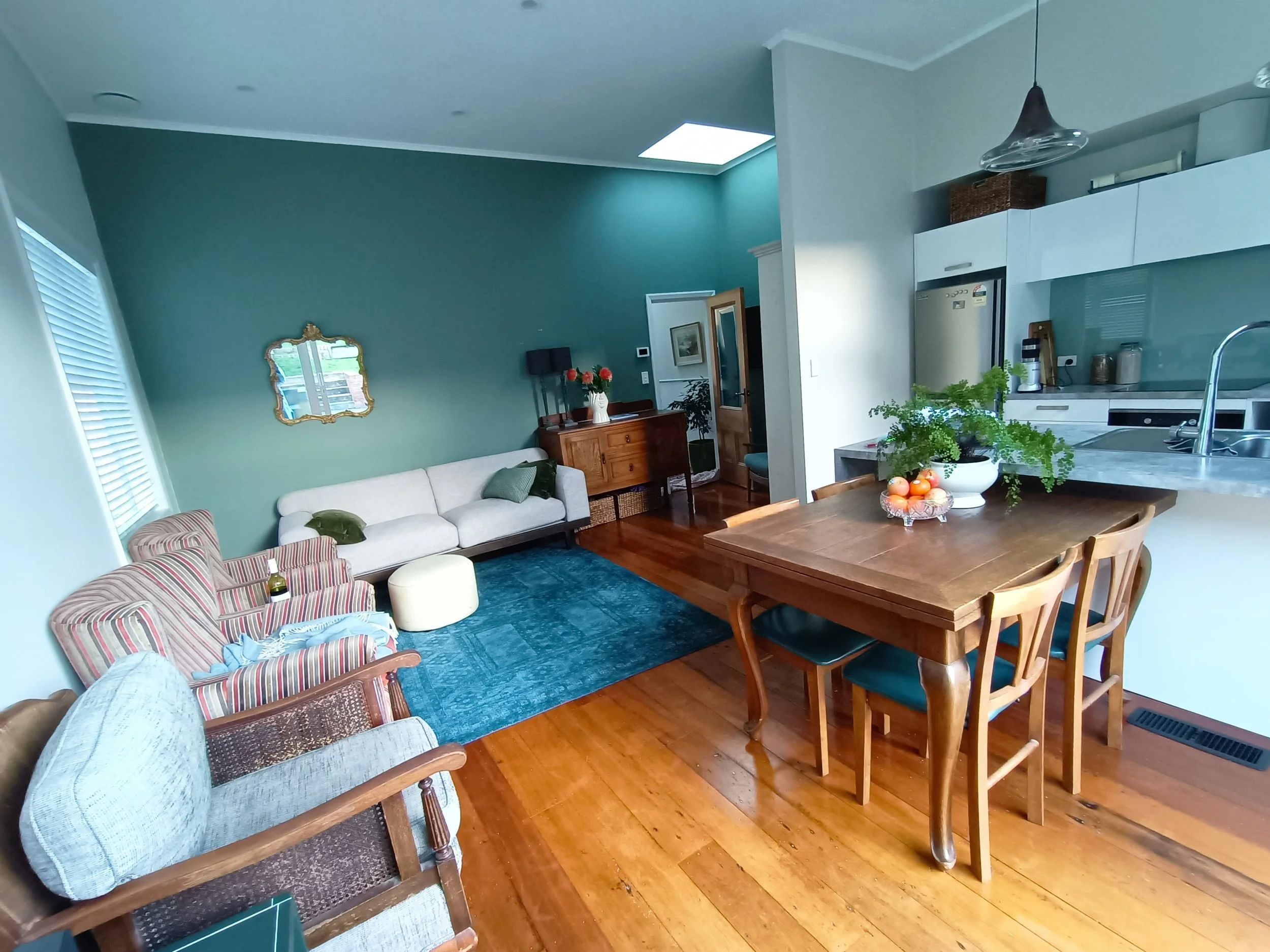
For a long time, I thought the dining table was the problem.
It was a big, solid, rectangular oak table. A good piece of furniture. Nothing wrong with it.
But it felt too heavy in the space.
So when I decided to change it, I could have simply gone looking for another dining table.
Instead, I started thinking about what I actually needed the space to do.
And that changed things.
What problem was I really trying to solve?
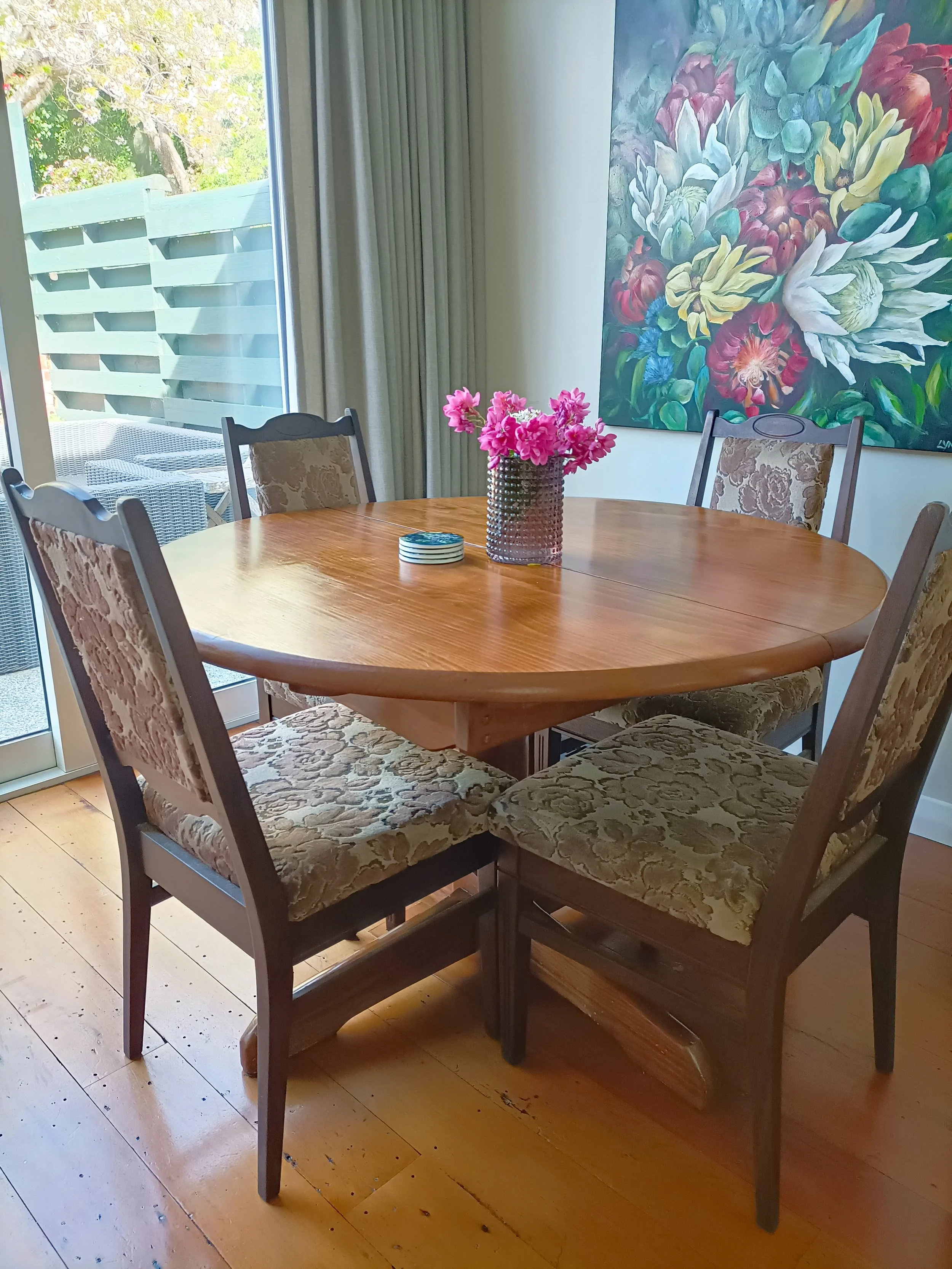
I wanted a dining table that felt lighter in the room.
But I also wanted to be able to sit by the window and enjoy the morning sun.
I had previously used a small armchair in the sunny spot because my dining chairs weren’t that appealing to sit in.
Once I got clear about what I needed the space to achieve, a round table and more comfortable dining chairs made much more sense.
By getting to the real issue and figuring out how I actually wanted to use the space, my new table has solved more of the actual problem.
And that's something I think we often miss when we're changing our homes.
We jump to the solution too quickly
We see something we don't like and immediately start looking for its replacement.
The sofa is wrong → new sofa.
The room feels empty → buy more things.
There's nowhere to sit → add a chair.
The room feels cluttered → buy storage.
But before deciding what to buy, it can be really useful to stop and ask:
What am I actually trying to solve?
Because the answer might be quite different from what you first thought.
Maybe the sofa isn't too big.
Maybe the furniture is arranged in a way that isn't working.
Maybe you don't need more storage - Maybe you need fewer things.
Maybe you don't need another chair, but the one you've already got is in the wrong place.
Or maybe, like me, you discover that changing one piece of furniture can solve several problems at once.
Good design starts with the life you're actually living
I think this is one of the reasons I don't believe decorating should start with shopping.
Before we choose the beautiful things, we need to understand what the room needs to do.
How do you use it?
What isn't working?
Where do you naturally want to sit?
What feels awkward?
What do you wish you could do in the room that you currently can't?
What keeps annoying you?
And what would make everyday life just a little bit easier?
Because a room can look beautiful and still not work particularly well.
And equally, a room doesn't have to be perfect to work beautifully for the person living in it.
Sometimes the answer is surprisingly simple
The way I work doesn’t start with buying more.
It starts with understanding the real issues and making better decisions.
Sometimes that's moving something.
Sometimes it's taking something away.
Sometimes it's changing the way a space is used.
Sometimes it's altering something instead of replacing it.
And sometimes it really is buying something new.
When you do buy something, try to make sure it’s solving the real problem.
That's the difference between decorating a room and designing a home around your life.
So if there's a room in your home that's been bothering you, before you start looking at Pinterest or opening Marketplace, try asking yourself:
What is actually bothering me?
What am I trying to make easier?
What do I want to be able to do in this room that I can't do now?
And most importantly:
Am I solving the real problem — or just replacing the thing I've decided is the problem?
Because sometimes the best solution isn't the one you expect.
And sometimes, once you understand what's really going on, the answer becomes surprisingly obvious.
That's the beauty of getting clear first.
You stop reacting to what's in front of you and start designing for the life you actually want to live.
Want a clearer way to see your home?
Sometimes you don't need more ideas. You need someone to help you work out what's actually not working — and what would make the biggest difference.